The Email Identity Question
One of the most practical questions in digital privacy is deceptively simple: when should you use your real email address, and when should you use a temporary one? The answer has significant implications for your privacy, inbox cleanliness, and long-term digital security.
This guide provides a clear, practical framework for making the right choice every time.
Understanding the Two Types
Your Personal (Primary) Email
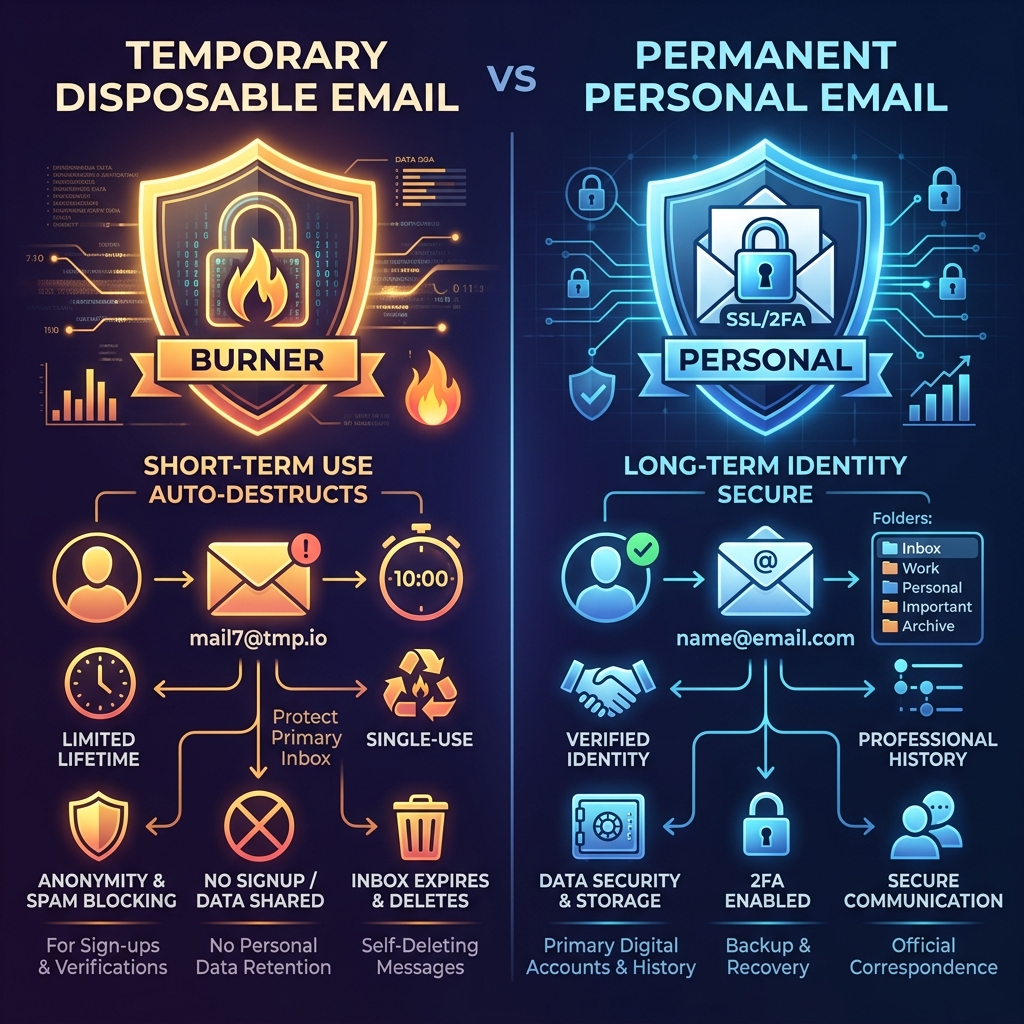
Your personal email is your permanent digital identity. It is typically associated with your real name, used for account recovery, and linked to critical services. It is the address you give to your bank, your employer, your doctor, and your close contacts. Its value lies in its permanence and trustworthiness — and that is precisely what makes it worth protecting.
The Temporary Email Address
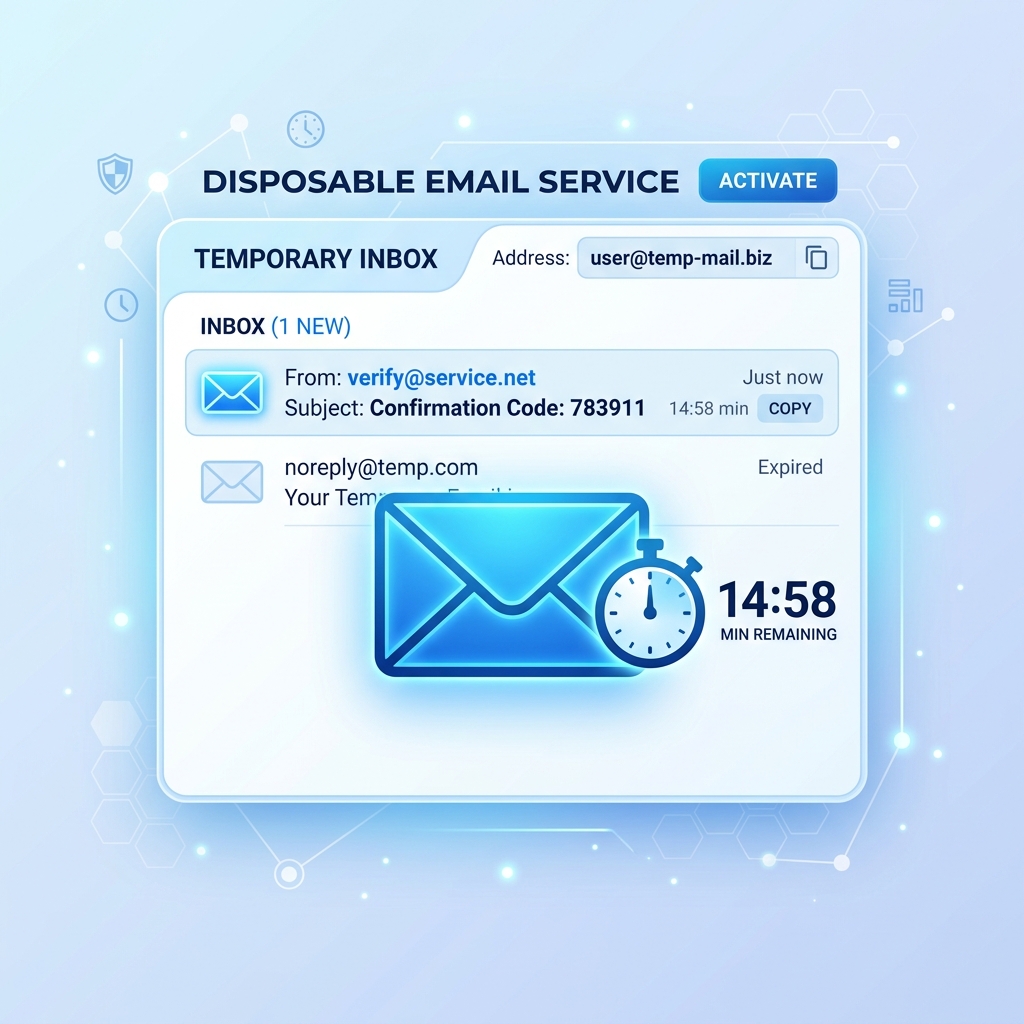
A temporary email is an anonymous, disposable address that can receive messages for a limited period before expiring. It requires no registration, creates no paper trail, and leaves no lasting connection between you and the service you signed up for. Its value lies in its disposability and anonymity. Learn more about how disposable emails work.
The Decision Framework: 5 Key Questions
Before entering any email address online, ask yourself these five questions:
- Do I need to receive future emails from this service? If you only need a verification code now and nothing else, use a temp email.
- Does this service handle sensitive data (financial, medical, legal)? Always use your real email for critical services.
- Do I trust this company's privacy practices? If uncertain, use a temp email to limit exposure.
- Is this a long-term relationship? Subscriptions, loyalty programs, and professional tools justify your real email. One-time downloads do not.
- Would I be comfortable if this email address appeared in a data breach? If the answer is no, use a temp email.
Use Your Real Email For:
- Banking, investment, and payment services
- Healthcare portals and insurance accounts
- Government services and tax platforms
- Primary work and professional accounts
- Password manager and security services
- Close personal contacts and family
- Long-term subscriptions you've fully vetted
Use a Temporary Email For:
- Any website you're visiting for the first time
- Free trial registrations
- Downloading free templates, eBooks, or resources
- Forum and community site sign-ups
- Online competitions and giveaways
- Software testing and development work
- Any service where you want a verification code but nothing else
The Middle Ground: Email Aliases
For services that fall between the two extremes — services you trust enough to use regularly but don't want directly linked to your real address — consider email aliasing. Services like SimpleLogin create unique, forwarding addresses you can enable or disable. They offer the accountability of a real address with the privacy of a disposable one.
Conclusion
The distinction between temporary and personal email is not about which is "better" — it is about using each for its intended purpose. Your real email is a trusted, permanent identity anchor that should be reserved for relationships worth that trust. A temporary email is a frictionless privacy tool for everything else.
By applying this framework consistently, you dramatically reduce your spam exposure, protect your real identity, and maintain a cleaner, more secure digital life. Get your free temporary email address and start making the right choice with every sign-up.