Defining the Disposable Email Address
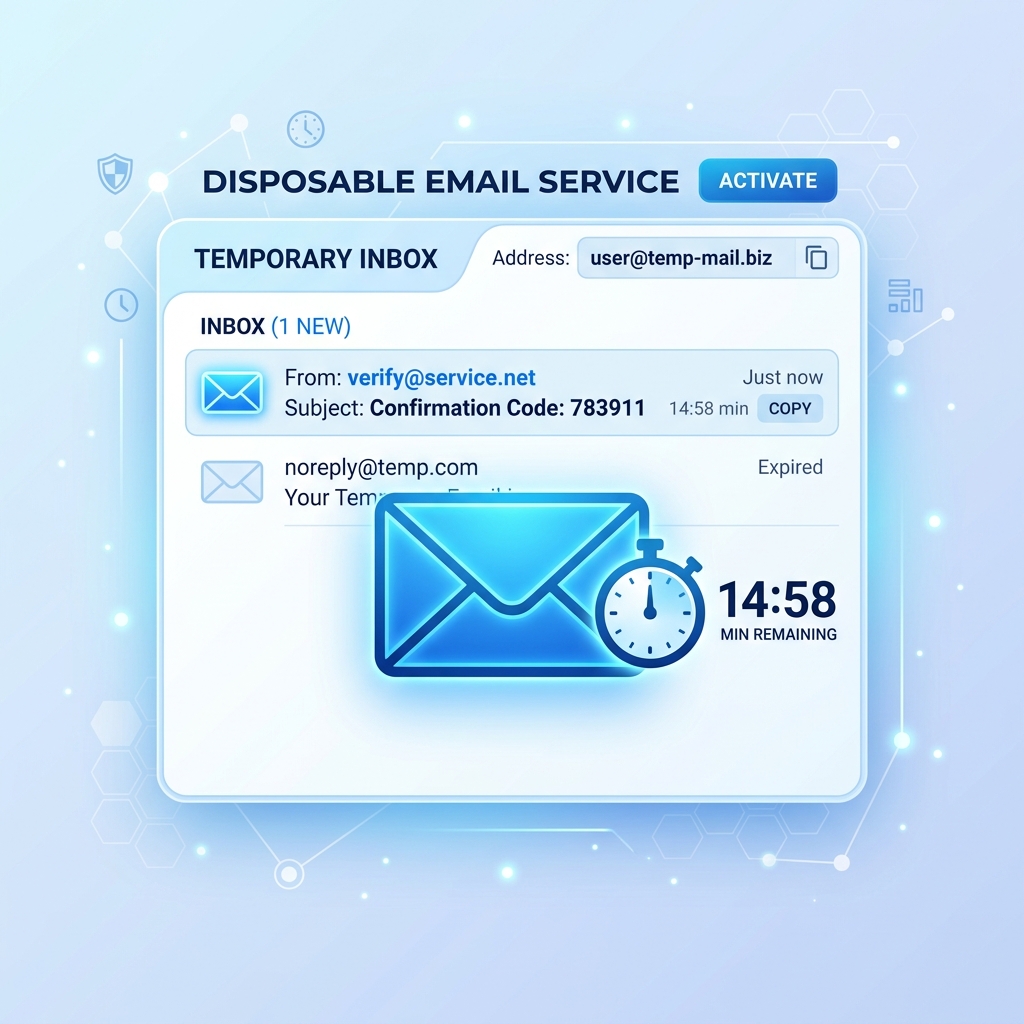
In our increasingly connected digital landscape, the concept of a disposable email address has transitioned from a niche tech tool to an absolute necessity for the everyday internet user. Also commonly referred to as a temporary email, throwaway email, burner email, or temporary email, it is essentially a short-lived, anonymous email address. You can create one instantly without any registration, use it to receive necessary messages like verification codes or download links, and then simply discard it. The beauty of this system is that it operates entirely without any connection to your real identity, your permanent IP address, or your primary inbox.
Unlike a regular email account (such as Gmail, Outlook, or Yahoo) that persists indefinitely and requires your name, phone number, and sometimes a secondary recovery email, a disposable address is explicitly designed for a specific, time-limited purpose. Once that purpose is fulfilled, the address is abandoned. Think of it as a digital one-time-use cup rather than a permanent ceramic mug that requires constant washing and maintenance.
How Does a Temporary Email Work Technically?
To truly appreciate the value of a temporary email, it helps to understand the simplified technical mechanics behind it. When you navigate to a service like our very own Tem-pmail platform, a seamless background process immediately kicks into gear:
- Instant Domain Allocation: The server maintains a pool of active domain names. As soon as your browser loads the page, the system automatically generates a randomized alphanumeric string and pairs it with one of these domains (for example, user789@temp-domain.com).
- Session Binding: This generated address is temporarily bound to your active browser session, usually via a secure cookie or local storage mechanism. This ensures that only you can view the emails arriving at this specific address during your active session.
- Real-Time Reception (SMTP Catch-All): The mail server is configured as a "catch-all" for its domains. This means any email sent to any prefix on that domain is accepted. The backend system rapidly matches the incoming email's "To:" field with the active browser sessions and pushes the message to your screen via WebSockets or AJAX polling, resulting in near-instant delivery.
- Automated Purging (Cron Jobs): Privacy is the cornerstone of a disposable email. After a predetermined period of inactivity (which can range from 10 minutes to 24 hours depending on the platform), automated backend scripts permanently delete the email address, its inbox, and all associated messages from the physical servers. No backups are kept, ensuring complete data destruction.
This entire lifecycle requires zero friction from the user. There are no passwords to remember, no security questions to answer, and absolutely no personal data stored.
Temporary Email vs. Email Aliases: Understanding the Difference
A common point of confusion arises when comparing temporary emails to email aliases. While both serve to mask your primary email address, they operate on fundamentally different philosophies and use cases.
- Email Aliases: An alias is an alternate address linked directly to your primary inbox (e.g., Apple's Hide My Email or a custom alias via your domain provider). Emails sent to the alias are permanently forwarded to your real inbox. If an alias starts receiving spam, you can simply delete or deactivate that specific alias. However, the service provider still knows your true identity, and the emails still consume storage space in your primary account.
- Disposable Temporary Emails: A disposable email is entirely detached from your primary inbox and identity. There is no forwarding mechanism. The inbox lives and dies on the temporary service's website. It offers total anonymity and ensures that not a single byte of spam or promotional content ever reaches your personal device or primary email storage.
A Real-World Scenario: The E-Book Download
Let’s consider a practical, everyday example to illustrate the utility of a temporary email address. Imagine you are researching a topic for work or school, and you stumble upon a website offering an incredibly detailed, free e-book that perfectly addresses your needs. The catch? You must provide an email address to receive the download link.
The "Before" Scenario (Using your real email): You enter your personal email. You get the e-book, which is great. However, for the next six months, that company sends you weekly newsletters, promotional offers for paid courses, and partner marketing emails. Worse, they sell their subscriber list, and suddenly you are receiving spam from completely unrelated companies.
The "After" Scenario (Using Tem-pmail): Instead of giving up your privacy, you open a new tab and visit our site. An address is instantly generated. You copy and paste this address into the e-book download form. Within seconds, the email with the download link appears in your temporary inbox. You download the PDF, close the tab, and the temporary address evaporates. You got exactly what you wanted, and your real inbox remains pristine, secure, and spam-free.
When NOT to Use a Disposable Email Address
While the benefits are immense, temporary emails are a specialized tool, not a universal replacement for permanent communication. Because these addresses expire and cannot be recovered, using them for the wrong purpose can lead to significant problems. You should absolutely avoid using a disposable email in the following scenarios:
- Banking and Financial Institutions: Never use a temporary email for anything related to your money, credit cards, or financial platforms. Banks regularly send crucial security alerts, statements, and require email verification for password resets. Losing access to this email means losing a critical layer of financial security.
- Government Services and Healthcare: Portals for taxes, healthcare records, or official government correspondence require a permanent, secure point of contact.
- Long-Term Service Registrations: If you are signing up for a social media platform, a gaming account, a software subscription (like Adobe or Microsoft), or a primary shopping account (like Amazon) that you intend to use for years, use a permanent email or a managed alias. You will eventually need to reset a password or verify your identity, which is impossible if the temporary email has been purged.
- Professional Communications: Applying for jobs, communicating with colleagues, or networking should always be done through a permanent, professional-sounding email address to establish trust and reliability.
Conclusion: The Ultimate Tool for Inbox Hygiene
In 2026, the battle against spam, phishing, and data harvesting is ongoing. Your primary email address is a digital anchor linked to your bank accounts, personal correspondence, and online identity. Protecting it should be a top priority. By understanding how disposable emails work and knowing when (and when not) to deploy them, you can confidently navigate the internet, access gated content, and sign up for quick services without ever sacrificing your digital peace of mind. Make temporary email services your first line of defense against the relentless tide of internet clutter.
When Should You Use a Disposable Email?
Perfect Use Cases
- Website registrations you're unsure about
- Free trial sign-ups where you only need the product temporarily
- Downloading free resources, eBooks, or templates that require an email
- Participating in online contests or giveaways
- Accessing forum discussions or communities as a guest
- Testing applications or services you're developing
When NOT to Use a Disposable Email
- Banking or financial accounts — you need account recovery access
- Government or official identity-linked accounts
- Primary work or professional communications
- Any service where you need to receive future important emails
The Privacy Advantage
When you use your real email to sign up for services, you create a traceable digital identity. Advertisers, data brokers, and marketing platforms link your email address across multiple services to build a comprehensive profile of your interests, behaviors, and demographics. A disposable email severs this linkage entirely.
This connects to a broader principle of online privacy called data minimization — sharing the least amount of personal information necessary for any given transaction.
Addressing Common Concerns
Are disposable emails illegal?
No. Using a temporary email address is completely legal in virtually every jurisdiction worldwide. The act of using an anonymous email address is protected as a privacy right in many countries. Illegal uses of email (fraud, harassment, scams) are illegal regardless of which type of address is used.
Can websites detect disposable emails?
Yes, some websites use databases of known disposable email domains to block sign-ups. Good temp mail services counter this by regularly adding new domains, making detection difficult. Services like ours offer multiple domain options for exactly this reason.
Conclusion
A disposable email address is a simple, free, and highly effective privacy tool that requires no technical knowledge to use. It works by creating a temporary, anonymous inbox that lets you receive verification emails and sign up for services without ever exposing your real address.
Whether you're protecting yourself from spam, avoiding phishing, or simply maintaining better inbox hygiene, a disposable email should be part of your regular online toolkit. Try ours for free — no sign-up required.