Introduction: You Have More Rights Than You Think
In the past decade, a global wave of data privacy legislation has fundamentally changed the relationship between individuals and the organizations that collect their personal information. Laws such as the European Union\'s General Data Protection Regulation (GDPR), California\'s Consumer Privacy Act (CCPA), and similar regulations in Brazil, South Africa, India, and dozens of other countries have established a new baseline for digital privacy rights.
Yet despite these legal protections, the vast majority of people are unaware of what rights they actually have. This article provides a clear, practical overview of your digital privacy rights and explains how to exercise them effectively.
The Core Principles of Modern Privacy Law
While each regulation differs in scope and enforcement, most modern privacy laws share a common set of principles. Understanding these principles empowers you to hold organizations accountable for how they handle your data.
1. The Right to Be Informed
Organizations must tell you what personal data they collect, why they collect it, how long they retain it, and with whom they share it. This information must be presented in clear, plain language — not buried in impenetrable legal jargon. This is why you see detailed privacy policies and cookie consent banners on virtually every website today.
2. The Right to Access
You have the right to request a copy of all personal data that an organization holds about you. Under GDPR, this request must be fulfilled within one month, free of charge. This is known as a Subject Access Request (SAR). Companies are required to provide the data in a structured, commonly used electronic format.
3. The Right to Rectification
If the data an organization holds about you is inaccurate or incomplete, you have the right to have it corrected without undue delay. This includes updating outdated contact information, correcting misspelled names, and fixing other errors that could affect your experience.
4. The Right to Erasure (Right to Be Forgotten)
You can request that an organization delete your personal data under certain circumstances — for example, if the data is no longer necessary for the purpose it was collected, if you withdraw your consent, or if the data has been processed unlawfully. This right is not absolute; organizations may refuse if they need the data to comply with a legal obligation or to establish a legal defense.
5. The Right to Data Portability
You can request that an organization transfer your data directly to another service provider. This right applies when you have provided the data voluntarily and the processing is based on consent or contract. It makes switching between services significantly easier and reduces vendor lock-in.
6. The Right to Object
You have the right to object to the processing of your data for direct marketing purposes, including profiling related to direct marketing. You also have the right to object to processing based on legitimate interests or for scientific, historical, or statistical research purposes.
Major Privacy Laws Around the World
GDPR (European Union)
Enforced since May 2018, GDPR is the most comprehensive and influential privacy regulation globally. It applies to any organization that processes the personal data of EU residents, regardless of where the organization is based. Penalties for non-compliance can reach 4 percent of annual global turnover or 20 million euros, whichever is higher. GDPR established most of the rights listed above and inspired similar laws worldwide.
CCPA / CPRA (California, United States)
The California Consumer Privacy Act, amended by the California Privacy Rights Act, gives California residents the right to know what personal data is collected, the right to delete it, the right to opt out of its sale, and the right to non-discrimination for exercising these rights. While it applies only to California residents, its impact is felt nationwide because most large companies serve California customers.
LGPD (Brazil)
Brazil\'s Lei Geral de Proteção de Dados, effective August 2020, closely mirrors GDPR and applies to any organization doing business in Brazil. It establishes similar rights and imposes fines of up to 2 percent of a company\'s revenue in Brazil.
POPIA (South Africa)
South Africa\'s Protection of Personal Information Act, fully effective in July 2021, regulates the processing of personal data and establishes rights including access, correction, and deletion. It applies to all organizations operating in South Africa.
How to Exercise Your Rights
Exercising your privacy rights is usually straightforward. Here is a practical step-by-step approach:
- Identify the data controller: Determine which organization holds your data. This is typically the company you signed up with directly.
- Find their privacy contact: Look for a "Privacy" section in their website footer, a Data Protection Officer email, or a dedicated privacy request form.
- Submit a clear request: State which right you wish to exercise and provide enough information for them to identify you in their systems. Be specific about the data you are requesting or requesting to delete.
- Keep records: Save a copy of your request and any responses. Organizations are required to respond within the legally mandated timeframe (typically 30 days).
- Escalate if ignored: If the organization does not respond or refuses your request without a valid legal basis, file a complaint with your local data protection authority.
Privacy Rights and Temporary Email
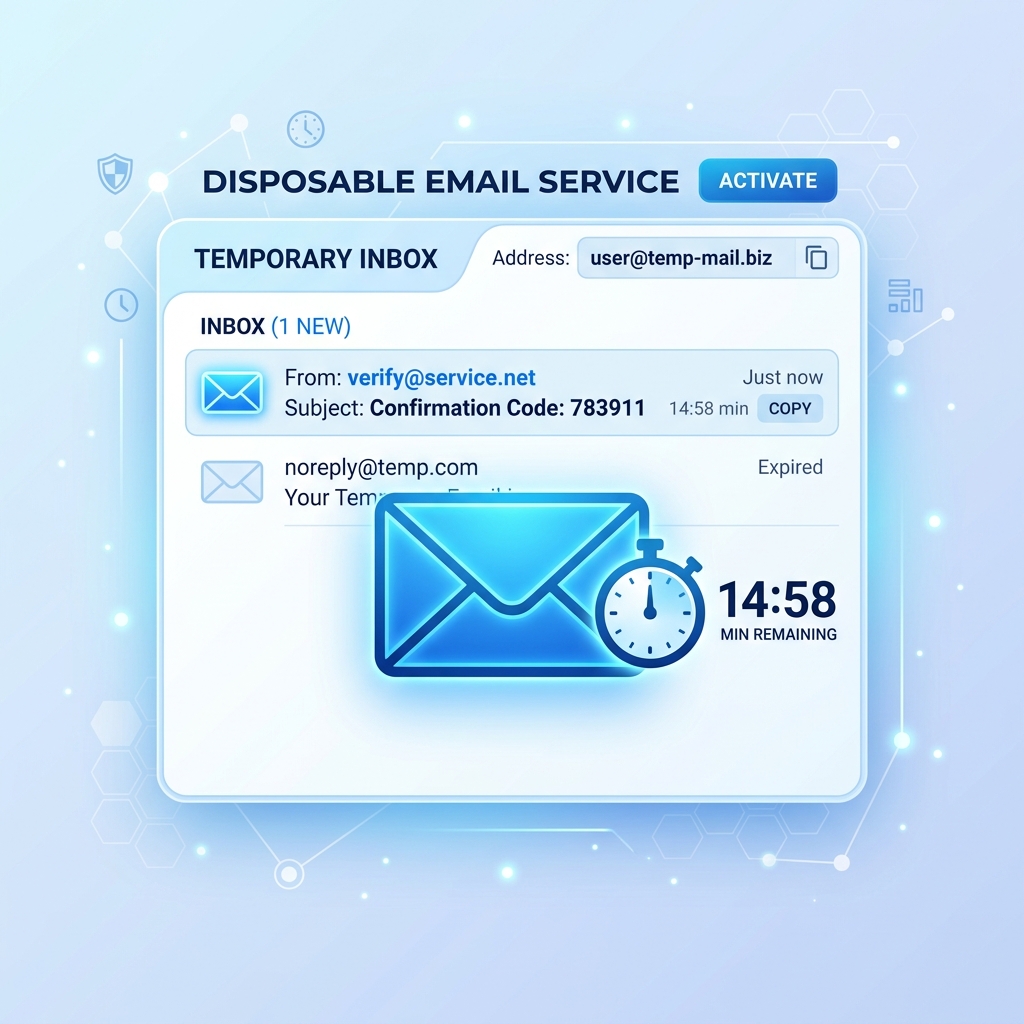
One of the most effective ways to control your digital footprint is to minimize the data you provide in the first place. Using a temporary email address for non-essential registrations ensures that companies cannot link your activity across services, making it harder to build a profile of you. This complements your legal rights by preventing data collection before it starts. For more on this approach, see Why Websites Sell Your Data — And How to Stop Them.
Conclusion
Digital privacy laws have given individuals unprecedented control over their personal data. The rights to access, delete, port, and object to data processing are powerful tools — but only if you use them. Take a few minutes to request your data from a major service you use. You may be surprised by how much they have collected. Understanding your privacy rights is the first step toward taking back control of your digital identity.
For the official text of the GDPR, visit the GDPR Information Portal. For CCPA details, the California Attorney General\'s CCPA page is the authoritative source.